Episode 99: Respect My Authority

Synopsis

What exactly is authority? Where does it come from? How do you get it? Can you move authority from St. Paul, MN to the south side of Chicago? Join Em and Jesse for a wide-ranging chat on the subject.

Notes

1/ Of course, many people in addition to women have a hard time getting others (i.e. non-group members) to pay attention to their authority. For example, trans and nonbinary people have a hard time getting anyone to listen to them speaking about their own lived experiences.

2/ I’ve published four novels and a novella since this was recorded, and people actually do think I’m an authority on some topics for some reason.

3/ The story about Aristotle’s phony translators comes from here, I think: https://historyofphilosophy.net/translation-movement

Pseudopigrapha: from pseudo, false, and epigraphe, name or inscription. A falsely attributed text.

U of Michigan’s Galileo text: “After an internal investigation of the findings of Nick Wilding, professor of history at Georgia State University, the library has concluded that its “Galileo manuscript” is in fact a 20th-century forgery. We’re grateful to Professor Wilding for sharing his findings, and are now working to reconsider the manuscript’s role in our collection.” Also, “Wilding concluded that our Galileo manuscript is a 20th-century fake executed by the well-known forger Tobia Nicotra.” (The quotes are from the linked website.)

4/ According to the Virginia Woolf society, the actual quote is: “I would venture to guess that Anon, who wrote so many poems without signing them, was often a woman.” (From ch 3 of A Room of One’s Own.)

Pseudo-Dionysius the Areopagite (5th/6th century CE))

Pseudo-Pseduo-Dionysius is anyone once thought to be Pseudo-Dionysius but now recognized (by modern scholars) to be someone other than Pseudo-Dionysius. Confused?

5/ Pseudo-Bonaventure (14th century CE) wrote Meditations on the Life of Christ.

6/ I’ve become a bit more familiar with copyright law in the three years(!) since we recorded this, since I’ve published three going on four books of my own since then. A really good example of a point I think past Em is trying to make is Sherlock Holmes, who has recently passed into public domain. He’s a neat character and everyone wanted to play with him (look at the adaptations of recent memory: the Robert Downey Jr. films, the BBC’s Sherlock, the American Elementary). But because of copyright law, this was fairly difficult and confusing until very recently, despite the character’s creator having been dead since 1930. These cases raise many questions of authorship vs ownership and how long someone should really be able to make money on an idea. (Patent Law is, if anything, worse, from what I understand.)

7/ It was a photograph of Prince! Since we recorded this, the Supreme Court sided against Andy Warhol’s estate: https://www.npr.org/2023/05/18/1176881182/supreme-court-sides-against-andy-warhol-foundation-in-copyright-infringement-cas

Girl Talk is awesome: https://www.youtube.com/watch?v=kSoTN8suQ1o

I mention him because there was a really good documentary about copyright called RiP! A Remix Manifesto that discussed his work (including a discussion of it with the head of the copyright office of the Library of Congress).

8/ Just to clarify, “fair use” is kind of a complicated issue. When you are a non-commercial educational podcast (ahem), you can use things (like samples of YouTube performances) without having to pay licensing fees. You can also fairly quote sections of things for criticism, news reporting, and research. You can therefore quote lines from songs or poems in textbooks, but not in novels because they aren’t considered teaching. Parody (hello, Weird Al!) can be a weird gray area, because a parody obviously has to be somewhat transformative but still retain enough of a likeness that people will know what you’re parodying, and on this question hangs a lot of lawsuits. (Not toward Weird Al though, as far as I know. But Margaret Mitchell’s estate did try to sue to block the publication of The Wind Done Gone.)

See also: Why does Ulysses (in Em’s novels) wear so many band T-shirts and occasionally mention songs and artists, but there are zero song lyrics in the books? Because you can’t copyright band names or album/song titles.

Steamboat Willie has actually entered public domain since we recorded this! [So amazing!–Jesse]

Peter Pan actually first appeared in 1902!

Also, sorry, “Peter Pan is a psychopomp” is somehow not a sentence I had on my bingo card. I guess it has lost a bit in its translation to the screen… On the plus side, SIDS rates have dropped dramatically since 1902?

“I can rewrite Macbeth if I want to.” Or a really complex riff on The Bacchae? Em of 2022 did not know what was coming, lol.

9/ Notably, Spivak also quotes primarily women.

The episode on Hrotsvit: Episode 22

10/ For more on Juliana of Cornillion and the Feast of Corpus Christi, see Episode 6.

11/ Wife of Bath’s Prologue and Tale are HERE. (Also, Chaucer was not, as far as we know, toxic like Joss Whedon!)

12/ Incidentally, violent, in-the-moment reactions to mistreatment by another person are called reactive abuse, and they’re often used by abusers to shift the blame onto their victims. If you are being abused or wondering if you are and want to talk to someone, check out the National Domestic Violence Hotline (https://www.thehotline.org/), or look for local programs. Here in Madison, for instance, we have Domestic Abuse Intervention Services (https://abuseintervention.org/).

Episode 98: In Rome for the Calends

Summary

It’s January, the first month of the year, ruled by the god Janus, who looks both ways. But a week ago it was December, the…tenth month of the year? What the heck was up with Roman calendars? Join Em and Dr. Jesse to explore why this otherwise competent civilization just fell apart when it came to tracking what day it was.

Notes

Jörg Rüpke, The Roman Calendar from Numa to Constantine: Time, History, and the Fasti, Wiley-Blackwell, 2011.

1/ Rome’s famous AVC (or AUC today), the abbreviation for Ab urbe condita (from the founding of the city), i.e. 753 BCE.

2/ For example, archeology uses “BP” or “Before Present.” Geology and astronomy and similar tend to use variations on “millions of years ago“.

3/ Calends! Nones! Ides!

4/ December is such a mess! For more on December not being the 10th month of the year (maybe ever!)–and/or the possibility of competing new years (one beginning in January and one in March), see Rüpke (p. 6).

5/ Fasti Antiates Maiores, created 60s or 50s BCE (Rüpke, p. 6), from before the Julian reforms in 46 BCE. January is the first month. Here is the original and here is the reconstruction.

6/ Annus confusionis ultimus! (46 BCE) See Rüpke, p. 112.

7/ Gregorian calendar!

8/ England finally officially adopts the Gregorian calendar in 1750. (This was adopted for the whole British Empire, including the colonies in America.)

Episode 97: Non-Roman Calendars

Synopsis

When is Hanukkah this year? When is Lupercalia, or Easter, or Midsummer’s Eve? When is your birthday? Figuring out when big events happen is incredibly important, and humans have been doing it for a long time. But while we can see some similarities in the process of calendar evolution, many civilizations had very different ways of conceptualizing and measuring time. Join Em and Dr. Jesse for a discussion of non-Roman calendars!

Notes

0/ Check out the Nerd and Tie podcast network! Official announcement here.

1/ A lot of Mayans live in Yucatán in Mexico. Between 1847–1933, the Mayan fought a long and bloody war against the government of Mexico, and for a while controlled an independent state. Eventually they won the right to break up some of the haciendas, making it a fairly successful indigenous land movement. Now in Yucatán, a lot of the land is collectively owned/managed by the Maya.

2/ St Patrick will be coming up in the future! His episode has been recorded.

3/ Sir Capricorn’s name turns out to be Sesame. He is amazing!

4/ Gobekli Tepe (settled roughly 9500 BCE)

5/ Wurdi Youang (Australia)

6/ Warren Field (Scotland)

7/ Hawaii

8/ Yoruba calendar

9/ Babylonian calendar (from the 2nd millennium BCE). See Lis Brack-Bernsen’s “The 360-Day Year in Mesopotamia

The early astronomical text known as MUL.APIN (from 1000 BCE).

10/ Ancient Egyptian calendar! And some fun artifacts from the Metropolitan Museum of Art.

11/ Mayan calendar! Very intriguing.

Here is the film 2012 which posits many incorrect things, not just about the Mayan calendar.

Episode 96: Pope Joan

Summary

Starting in the middle ages, a rumor spread of a female pope, elected because of her incredible learning, who went undiscovered until she gave birth to a child. At which point, everyone lost their minds. Join Em and Dr. Jesse to learn about the veracity of this tale and the wacky test it (allegedly) engendered. (Ha.)

Notes

Our sources:
Thomas F.X. Noble, “Why Pope Joan?” Catholic Historical Review 99.2 (April 2013) 219–238.

Eamon Duffy, Saints and Sinners: A History of Popes. Yale University Press, 2002.

1/ Jean de Mailly, 13th century Dominican chronicler in Metz, makes the first extant mention of Pope Joan in his Chronicle “Diocese of Metz” (Chronica universalis Mettensis) in 1255.

Etienne de Bourbon (also Dominican) adds to Mailly’s account a few years later in On the Seven Gifts of the Spirit.

Dominican Martinus Polonus (Martin Strebsky) writes down the version we all know between 1265–1277 in Chronicle of the Roman Popes and Emperors

2/ “A means of adding verisimilitude to an otherwise bald and unconvincing narrative.” From The Mikado by Gilbert and Sullivan.

3/ The description of this (definitely fake) ritual is in Duffy, Saints and Sinners, 156–7.

4/ Ember Days

5/ The Straight Dope was an alternative weekly column (in Madison it ran in the Isthmus, I think; also in the Chicago Reader) where readers could ask questions of a guy (gender nondenominational) who was essentially a reference librarian. The nom de plume was Cecil Adams. The column ran 1973–2018. The Pope Joan column is archived here: https://www.straightdope.com/21341608/was-there-once-a-female-pope

6/ Since we recorded this, The Onion has had a renaissance. If you subscribe, you can even get a print version! https://theonion.com/

Episode 95: Sur le Pontife d’Avignon

Summary

Avignon! A city where there is a bridge, and a song about the bridge. And, once, the pope lived there. Why? Let’s talk about this weird century.

Notes

1/ Avignon: it has a bridge! And a song about the bridge: “Sur le pont d’Avignon.” The bridge is medieval; the song dates from the fifteenth century: https://en.m.wikipedia.org/wiki/Sur_le_Pont_d%27Avignon

2/ Boniface VIII (Pope 24 December 1294–11 October 1303). He was…something. Definitely check out Dante’s thoughts!

3/ Dr. Jesse: we can all recognize that in the past there have been different times when a third party has interfered in an election…

Em: …

Em: oh my god, we recorded this in April 2024. She was talking about the 2000 election. [A lot has happened in a year. Now it could also be the NYC mayoral race!–Jesse]

4/ The episode on Catherine of Siena is number 6.

Jesse and I went to Siena at one point! I don’t remember if we saw her head. I’m guessing we did? We also saw a horse race, which means we were there on August 16, 2003? https://en.m.wikipedia.org/wiki/Palio_di_Siena [That was a great Palio! There were many, many false starts, and then someone fell (or was pushed/tripped) off their horse during the race, and the neighborhood whose rider fell (or was sabotaged) definitely thought he was sabotaged, and they all stormed the track toward the neighborhood they thought pushed him, and we were standing in between the two groups. –Jesse]

5/ Episode Summary!

Avignon Papacy:

Seven popes resided at Avignon instead of Rome

WESTERN SCHISM:

ROME AVIGNON PISA
Urban VI (1378–1389) Antipope Clement VII (1378–1394)
Boniface IX (1389–1404) Antipope Benedict XIII (1394–1423)
Pope Innocent VII (1404–1406)
Pope Gregory XII* (1406–1415)

*Voluntarily resigns to end schism

Antipope Alexander V (1409–1410)

Antipope John XXIII* (1410–1415)

*Submitted to Martin V in Florence in 1418 and died shortly thereafter. The Medici built him a huge tomb.

Pope Martin V (1417–1431)

Episode 94: Popes and Antipopes

Synopsis

Let’s talk about a few good antipopes. What’s that about, anyway? If they meet, do they both annihilate? How do they sometimes switch places? Join Em and Dr. Jesse as they go over some of the more interesting antipopes of the 11th and 12th centuries.

Notes

1/ The board game is Kremlin.

2/ Gregory VII (born c1015, namesake of the reform movement, pope 1073–1085). Gregorian reform!

3/ Investiture Controversy. The big one is roughly 1076–1122, but there are a bunch of investiture struggles.

4/ Henry IV (1050–1106; king of Germany from 1054, of Italy and Burgundy from 1056, and Holy Roman Emperor from 1084)

5/ Antipope Clement III (born c1029, Antipope 1080–1100)

6/ Antipope Theodoric (or Sylvester III, but there was an earlier Sylvester III, who was considered an antipope by Theodoric but is not currently listed as one by the Vatican).

7/ Concordat of London 1107 between Henry I of England and Pope Paschal II

8/ Holy Emperor Henry V (born early 1080s-1125; Holy Roman Emperor 1111–1125)

9/ Henry V appoints Antipope Gregory VIII (Antipope 1118–1121, dies 1137)

10/ Concordat of Worms 1122

11/ Pope Innocent II (Pope 1130–1143) is elected by a minority

Antipope Alacletus II (1130–1138) is elected by a majority

12/ Lateran II convened in 1139 by Innocent II

Antipope Victor IV (not to be confused with a later Antipope Victor IV) submits to Innocent II

13/ St Bernard dogs get their name from their original breeding place in Switzerland, which is named for St Bernard of Menthon, not Bernard of Clairvaux!

14/ Lateran III 1179

15/ Ubi Periculum 1274, issued by Pope Gregory X during the Second Council of Lyon, establishes the papal conclave

16/ Actually, Francis was chosen pretty quickly! It just seemed long in our crazy media climate.

17/ Pope Clement V (born c. 1264; Pope 1305–1314) and the Avignon Papacy (1309–1376/7)

18/ Pope Celestine V: the previous pope who resigned! He was pope for a few months in 1294.

19/ Pope Boniface VIII (born c.1230; Pope 1294–1303), famously hated by Dante.

Episode 93: Take Me Down to Vatican City

Synopsis

When did the conclave system get started and why? Following on the heels (uh, vaguely) of our emergency popecast, Em and Dr. Jesse discuss history of papal elections and how the Church got to where it is.

Notes

Saints and Sinners: A History of the Popes, by Eamon Duffy. 4th ed. Yale University Press, 2015.

1/ We recorded this in February 2024; Benedict died on the 31st of December, 2022. He was 95. JPII lived to 84 (d. 2005) and Francis was 88. [Benedict XVI was the former head of the Dicastery or Congregation for the Doctrine of the Faith, the formerly known as the Congregation of the Inquisition. –Jesse]

Celestine V (c.1210/15–1296; pope July 5–December 13 1294)

Gregory XII (c1327–1417; pope 1406–1415, resigns to end schism)

Pope John XXIII (1881–1963, pope 1958–1963) called the Second Vatican Council (1962–1965).

Pisan Antipope John XXIII (d.1419; pope 1410–1415)

2/ I’m sure some of this background on the various popes and especially Francis is a repeat from last episode. If you took good notes and don’t need a reminder, I’m sorry.

3/ “Eventually they get found liable for their sayings.” I have no idea what politician that was a dig at. I’m pretty sure that the “mayors of major cities who get more say than the governor” is probably a reference to the mayor of NYC vs the NY governor?

4/ For more on the Ottonian Dynasty!

5/ You can actually still become a married male priest in the Holy Roman Catholic and Apostolic Church by: first becoming a pastor in another denomination, getting married there (and a certain amount of time elapsing), and then converting to Catholicism and applying to become a priest. (This requires your wife’s consent, apparently. In case you were wondering if women ever got asked to consent to anything in Christianity. There is one thing.)

You can also become a priest if you’re a widower.

6/ Gregory VII (c1015–1085; pope 1073–1085)

Peter Damian (c1007–1072)

Lateran Council of 769

7/ Pope Paul I (pope 757–767)

Antipope Constantine II (pope 767–769)

Antipope Philip (pope only one day, July 31, 768)

Pope Stephen III (c720–772; pope 768–772)

Pope Adrian I (pope 772–795)

8/ Stephen IX (c1020–1058; pope 1057–1058)

Antipope Benedict X (pope 1058–1059)

Pope Nicholas II (c. 990/95–1061; pope 1058/9–1061)

Episode 92: Emergency Popecast

Synopsis

Pope Francis, beloved of medievalists, died on April 21, 2025, so we’re here with all you might care to know about the forthcoming conclave (now a film starring Ralph Finnes), the history of conclaves, and why medievalists loved Francis so much, anyway.

Notes

1/ Benedict went to Mater Ecclesiae Monastery, I think. It’s in the neighborhood.

2/ Jesse and I decided to try and do any extra notes attached to NEXT episode, so y’all are stuck with only my ramblings down here this time.

3/ Sorry about the sound quality. I messed something up during the recording process. Also I’ve never sat still in my life, apparently. What a way to find out.

4/ Books and films in this episode:

Conclave (2024)
The Name of the Rose, by Umberto Eco (1980)
The Key to the Name of the Rose: including translations of all non-English passages, by Adele J. Haft, Jane G. White, and Robert H. White (1987)
The Shoes of the Fisherman (1968)

5/ I asked Jesse for clarification about what is meant by someone getting to be pope with a minority of votes. Basically the minority vote-getter (Innocent II) went off and set up as pope anyway, and eventually everyone came around to his way of thinking and made the majority vote-getter (Anacletus II) an antipope. We’ll have a whole episode on antipopes in a couple of weeks when we discuss this in more detail, so keep an eye out.

6/ Hey, Chuck! Sorry. Be less of a fuddy-duddy.

7/ The official job description as posted to LinkedIn: https://www.linkedin.com/posts/vaticano_after-receiving-several-messages-of-interest-activity-7322589152439418880-dmNA

Episode 91: The Field Where I Grow My Ducks

Summary

Em and Jesse are back with more medieval meme review. Join us as we discuss martyrdom, marginalia, The Seventh Seal, and the Bayeux Tapestry.

Notes

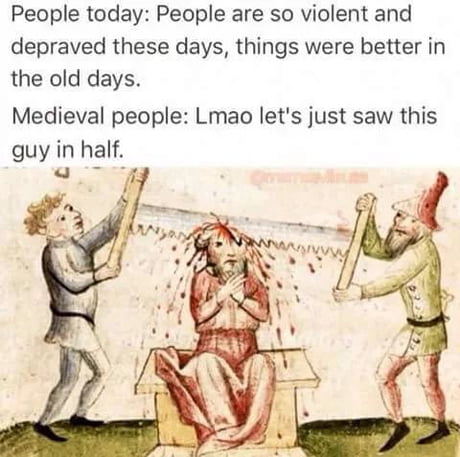
1/ martyrdom of Isaiah:People today: People are so violent and depraved these days, things were better in the old days. Medieval people: lmao let's just saw this guy in half. A marginalia drawing of a guy in red robes being sawed in half by two other men.

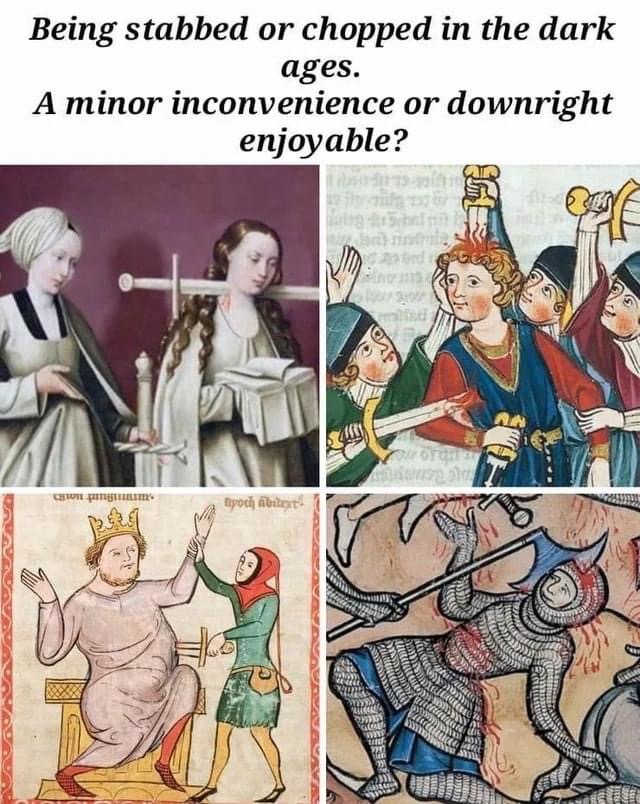
Martyrdom sword through throat:Being stabbed or chopped in the dark ages. A minor inconvenience or downright enjoyable? There are four images, one is a painting of a woman with a sword through her throat, the other three are marginalia of people being stabbed with swords or an ax.

2/ St. Sebastian. Artists love him!

Just to be clear, “It’s difficult to assert that there were any gay men before Walt Whitman” is a joke about how historians tend to act. Generally, if you look at the comments on Wikipedia, it can be difficult to assert that people are gay after Whitman too—there was one actor who lived with his partner very openly for thirty years, and on the talk page people were still debating if he should be categorized as gay. This about someone who died in 1993.

The Last Judgement: https://www.museivaticani.va/content/museivaticani/en/collezioni/musei/cappella-sistina/giudizio-universale.html

Rubens’s St. Sebastian: https://en.wikipedia.org/wiki/St_Sebastian_(Rubens)

3/ https://en.wikipedia.org/wiki/The_Seventh_Seal

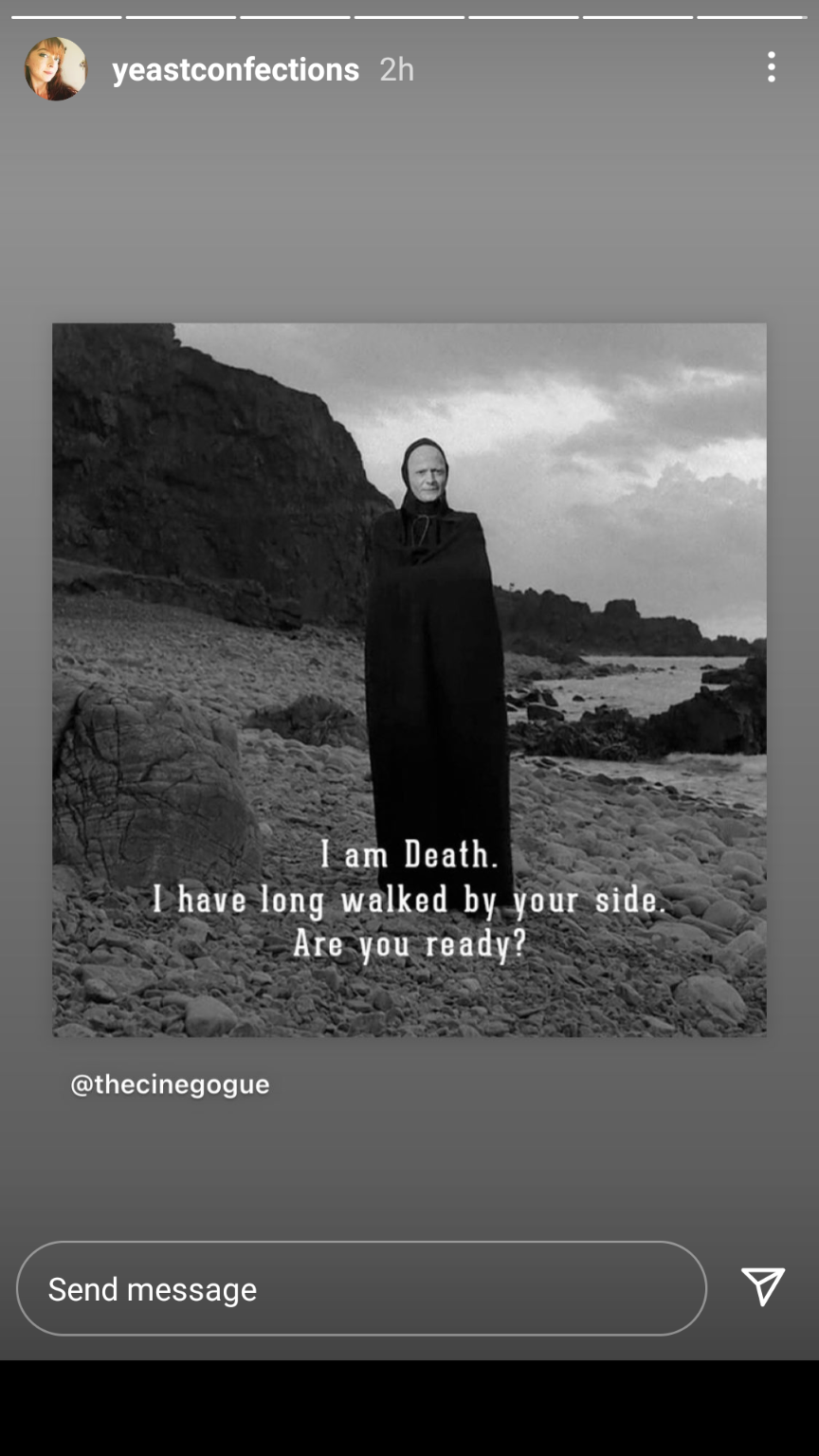
A shot of Death from The Seventh Seal. The caption says, "I am Death. I have long walked by your side. Are you ready?"Death was played by a guy named Bengt Ekerot. No one seems to know how tall he was, but Max Von Sydow was apparently about 6’4″.

4/ “Give a shoutout to Sandman…” We recorded this in 2022, long before the allegations against Neil Gaiman became public. 🙁 We condemn his behavior in the strongest possible terms. [Terrible people can make amazing art that contradicts their own actions in their personal lives. It’s really unsatisfying, but an important (and unfortunate) fact about human nature.–Jesse]

5/ https://en.wikipedia.org/wiki/Albertus_Pictor

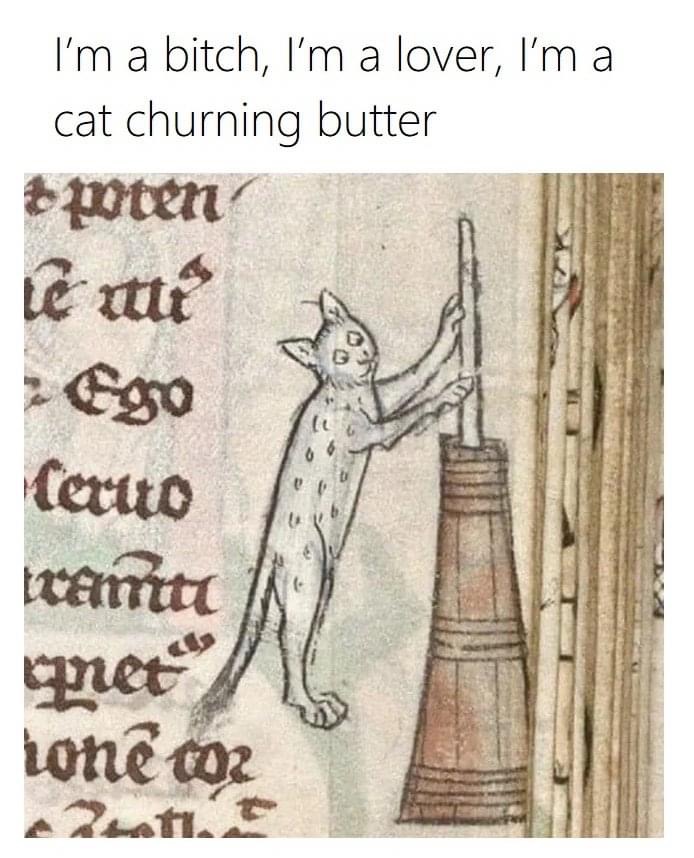
6/ I'm a bitch, I'm a lover, I'm a cat churning butter. A marginalia drawing of a cat standing on its back legs, apparently churning butter at a butter churn.David Jenkins was the creator of Our Flag Means Death.

Meredith Brooks, “Bitch.” https://genius.com/Meredith-brooks-bitch-lyrics

7/ The Rothschild Canticles: https://collections.library.yale.edu/catalog/2002755 [scroll down to page 148r]. The book takes its name from Edmond de Rothschild, rather than whoever commissioned it. E. de R. (aka Baron Abraham Edmond Benjamin James de Rothschild, 1845–1935) was indeed a member of the powerful banking family and subject of many anti-Semitic conspiracy theories you are thinking of. Where it came from before that is unclear, at least according to the provenance information provided by Yale.

Citation: MS 404, folio 148 recto.

John Boswell was a Yale scholar who wrote a book called Same-Sex Unions in Premodern Europe where he argued that the early Church had a ritual called “adelphopoiesis” (brother-making) that was essentially a marriage ceremony for same-sex couples. (This being the thing back before the Church felt like it cared much about who married whom, which is a rather newer thing than they would like to admit.) The rite still happens today—here (https://www.npr.org/2024/04/09/1243606135/a-look-at-the-ancient-practice-that-turned-friends-into-family) is an NPR article about two women who underwent the ritual in 1985. (And history will say they were roommates.) (Except in this case it seems as though they were. Sorry.) (The point being that the rite is perceived somewhat differently today. Or at least by NPR.)

Boswell died in 1994, about a decade after Foucault.

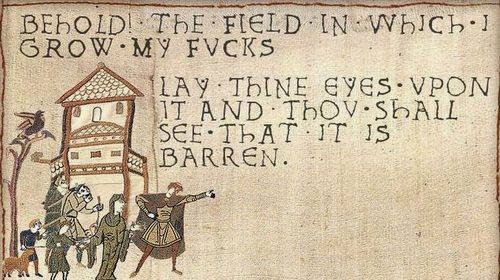
8/ In the style of the Bayeux Tapestry, a man pointing. The words read: Behold! The field in which I grow my fucks Lay theine eyes upon it and thou shall seee that it is barren.

Episode 90: Ask a Memevalist

Synopsis

Memes. Love or hate them, they’re hard to escape. Let’s do a medieval meme review.

Notes

1/ Sorry for the weird sound at the beginning. File errors.

2/ There are whole Bsky accounts like “weird medieval guys“.

3/ Cave Canum

Know thyself

4/ The Book of Dog Names:

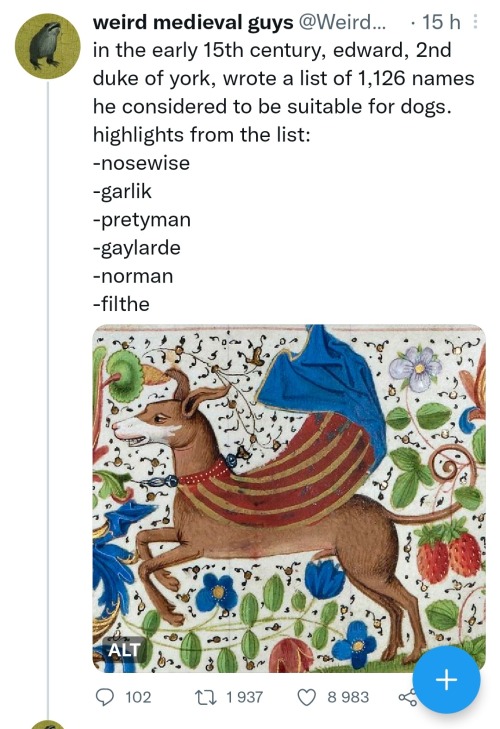
Tweet from Weird Medieval Guys account: in the early fifteenth century, Edward, 2nd duke of york, wrote a list of 1,126 names he considered to be suitable for dogs. Highlights from the list: -nosewise -garlik -pretyman -garlarde -norman -filthe (here is a marginalia picture of a dog with a red and blue cape)some more good ones: -salmon -synfull -havegoodday -"nise" as well as "noty" -grimbolde -childe -coke -baby -stykkefaste -snacke -wellyfownde -tullymully -honyball -alberte -strawnge -crampette -argument -best-of-all -bonyfaunte

Superdog’s name is Krypto 🙂

Livre du Chasse (see Episode 29 note 5 for more!)

Here is the Christie’s description for this specific manuscript.

Edward, Duke of York (1373-1415–he died at Agincourt!!!)

“Gentlemen of England now abed”: An (incredibly famous) line from Henry V

“Gallant, springing, brave Plantagenet”: From the scene in Richard III where the two murderers go to kill Clarence, Duke of Gloucester (on RIII’s orders, of course).

Interpolated: to insert between two parts.

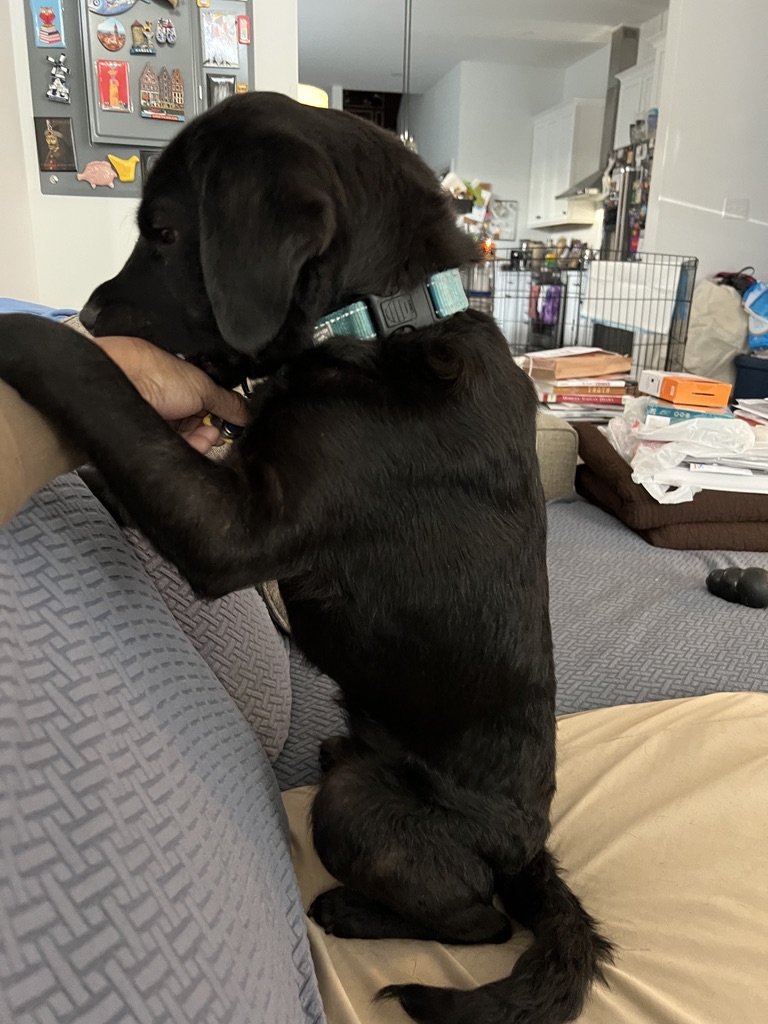
A yellow lab doggy siting on a sofa. (Wrigley) A black lab puppy sitting on a gray sofa. He is sitting up and chomping on someone's hand. (Addison)

RIP Wrigley, bestest girl (2009-2024). Now we have Addison, the best boy.

5/ Here’s a name–age calculator: https://randalolson.com/name-age-calculator/

Interestingly, Jessica has almost the same arc as Tiffany, but Tiffany is definitely a very 1980s neon name and Jessica is not. Is it because of the prominence of a Jessica in Shakespeare’s A Merchant of Venice that makes it clear to us that the name is not a modern invention?

The Tiffany video

6/ If you’re wondering why we mention Carl Gustav and not Charles III, it’s because we recorded this in 2022 when Elizabeth II was still alive. Also, if you’re wondering why Em says “Carl VI Gustav” rather than “Carl XVI Gustav,” the answer is…I have no idea. Sorry.

7/ Screenshot from Tumblr. Account: hxasinthus i wish it was 1600 so i cood spellee words howee everr my harte desyred Account: HolisticFansStuff Source: hxasinthus #thou canst spelle wyrds howevere thou liekest alraedye if thou isntst a couweurde Tags via @aziraphalesbian Account: FlourescentJellyfish Please no this is how French happened

I don’t know, Jesse. NYT has gone downhill lo these last two years. [ARGH, yes. –Jesse]

8/ Melvil Dui. For some reason we (the world) kept the spelling of his first name but not his last. https://en.wikipedia.org/wiki/Melvil_Dewey I’m not a Dewey Decimal superfan, but I’ll admit it’s very useful.

9/ I have heard the “don’t use first person pronouns in your essay” rule explained as: it’s your essay, we know it’s your opinion. So just say what it is. [Yes, but you might be quoting other people’s opinions, some of which you like and some of which you don’t! And you have to be able to say “THAT person says X, but I think Y.”–Jesse]

10/ The Oxford Dictionary of African American English: https://www.oed.com/discover/odaae

The Dictionary of American Regional English: https://www.daredictionary.com/

Passing Slang of the Victorian Era: https://archive.org/details/passingenglishof00wareuoft/page/n5/mode/2up

11/ “I will never be detail-oriented enough” J/K guys, in the last two three years since we did this, I’ve become EVEN MORE detail-oriented. I will NEVER STOP.

Episode 89: The Three Hares on the Silk Road

Synopsis

Trade goods weren’t the only things that moved along the Silk Road. Join Em and Jesse as they trace the history of an interesting artistic motif that made it from China all the way to England!

Notes

0/ Credit to Hither, Page, by Cat Sebastian, for bringing this topic to my attention.

1/ Previous episodes on trade routes were ep 83 (Old Silk Road, Take Me Home) and 84 (Trans-Saharan Trade).

2/ The Three Hares: this blog (http://www.vikkiyeatesillustration.co.uk/blog/a-brief-explanation-of-the-three-hares-symbol) has many example illustrations!

3/ “Wheel of Dharma, turn turn turn! Tell me the lesson that I must learn!” https://en.wikipedia.org/wiki/Dharmachakra

4/ According to Wikipedia, among vertebrates, natural parthenogenesis is only reported in lizards, snakes, birds, and sharks. (And maybe amphibians and snakes? Whoever wrote this didn’t do a great job.) It has been artificially induced in pigs and mice. (https://en.wikipedia.org/wiki/Parthenogenesis) I can’t believe I’m writing a note about this.

5/ Taylor Mac’s piece is A 24-Decade History of Popular Music. https://en.wikipedia.org/wiki/A_24-Decade_History_of_Popular_Music Trailer here: https://www.youtube.com/watch?v=ZwnddB4dFYk I wish I lived in New York and could just be weird for a living.

6/ Jesse explains why rabbits are not kosher a little oddly—in order to be kosher, a land animal must have cloven hooves and it must chew its cud. Even if rabbits chewed their cud (they don’t), they don’t have hooves. (The weird part of all this is “ergo, they’re rodents and not suitable for consumption.” That part I can’t explain.)

7/ Rabbit starvation? It looks like the general idea is that because rabbit meat is very low fat and high protein, if you eat only that without other fats in your diet, you can intake so much protein you overwhelm your kidneys and they dump bad stuff into your bloodstream. Also called mal de caribou. Charles Darwin mentions this in The Voyage of the Beagle:

We were here able to buy some biscuit. I had now been several days without tasting anything besides meat: I did not at all dislike this new regimen; but I felt as if it would only have agreed with me with hard exercise. I have heard that patients in England, when desired to confine themselves exclusively to an animal diet, even with the hope of life before their eyes, have hardly been able to endure it. Yet the Gaucho in the Pampas, for months together, touches nothing but beef. But they eat, I observe, a very large proportion of fat, which is of a less animalized nature; and they particularly dislike dry meat, such as that of the Agouti. Dr. Richardson also, has remarked, “that when people have fed for a long time solely upon lean animal food, the desire for fat becomes so insatiable, that they can consume a large quantity of unmixed and even oily fat without nausea:” this appears to me a curious physiological fact. It is, perhaps, from their meat regimen that the Gauchos, like other carnivorous animals, can abstain long from food. I was told that at Tandeel, some troops voluntarily pursued a party of Indians for three days, without eating or drinking. (https://www.gutenberg.org/cache/epub/944/pg944-images.html)

8/ The hoopoe: https://en.wikipedia.org/wiki/Hoopoe

9/ Oberammergau was Episode 52.

10/ Swastika from 10,000 BCE: https://en.wikipedia.org/wiki/Mezine and https://en.wikipedia.org/wiki/Swastika

11/ Triskelion: https://en.wikipedia.org/wiki/Triskelion

Triquitera/trefoil knot: https://en.wikipedia.org/wiki/Trefoil_knot#In_religion_and_culture

12/ Sicily flag: https://en.wikipedia.org/wiki/Trefoil_knot#In_religion_and_culture

Isle of Man flag: https://en.wikipedia.org/wiki/Flag_of_the_Isle_of_Man

13/ Image of the three hares on a late-12th-century or early-13th-century Iranian brass tray: https://www.chrischapmanphotography.co.uk/hares/page5.htm (no images are available of the 1281/2 copper coin minted in Iran, possibly for the Mongolian empire)

14/ “The Mongols were basically fine…” as long as you weren’t in China. (Wince)

15/ The three hares motif was popular in synagogues in Germany and Eastern Europe: Khaimovich, Boris. 2011. “On the Semantics of the Motif ‘Three Hares Chasing Each Other in a Circle’ on Jewish Monuments in Eastern Europe.” East European Jewish Affairs 41 (3): 157–80.

16/ English bosses: a “boss” (an architectural feature that protrudes from a ceiling) is in fact etymologically related to “emboss” (“to ornament with raised work”). They both descend from the old French (i.e. 12th century) boce, “hump, swelling, or tumor.” https://www.etymonline.com/word/emboss

This makes sense because the one Em is thinking of (where you press a design into something) is actually “deboss,” which comes from “de”+”emboss” and so is related to both via the transitive property of etymology.

Numerous great pictures of the wide variety of three-hares bosses in England:

https://www.chrischapmanphotography.co.uk/hares/haresmen.htm

https://dartmoorexplorations.co.uk/the-three-hares/

17/ Bishop Walter Branscombe, Exeter Cathedral, Devon: https://en.wikipedia.org/wiki/Walter_Branscombe

CORRECTION: His (painted) cloth is clearly from the East via the Silk Road, but it contains different animal motifs (NOT the three hares specifically). https://www.chrischapmanphotography.co.uk/hares/page4.htm

18/ Tinners are tin miners. Not people who put things in tins.

19/ We recorded this episode like two years ago and this T-shirt meme example is so no longer relevant. [All good memes come back around! And these are still around.–Jesse]

20/ Isle of Man motorcycle race is the Isle of Man TT: https://en.wikipedia.org/wiki/Isle_of_Man_TT From 1927 to 2023 there were 156 fatalities. In 2022, there were six, making it the most deadly year since 1970 (this counts deaths both during practices and during the actual event).

21/ The Isle of Man is a crown dependency. It is self-governing; currently, Charles III is Lord of Mann. The UK will defend the island, but it is a separate international entity in other respects.

Jesse: Oh WOW, did we record this before the Queen died?!

Episode 88: The Peasants Are (Still) Revolting

Synopsis

In a first for Ask a Medievalist, Em sits down with Sebastian Nothwell to discuss his approach to writing historical/historical fantasy novels. In the process, they get into everything from Victorian steam power to the effects of the peasants revolt of 1381 on the chartists in the 1830s–50s. You can find Sebastian’s website at https://sebastiannothwell.com/.

Notes

1/ British Newspaper Archive: https://www.britishnewspaperarchive.co.uk/

The Dictionary of Victorian London is also a great place for info. It’s composed largely of clippings from newspapers and books of the time, arranged by topic: https://www.victorianlondon.org/index-2012.htm

2/ Victorian Steam Power: https://en.wikipedia.org/wiki/Steam_power_during_the_Industrial_Revolution

3/ The UK shut down the coal plants in September 2024: https://interactive.carbonbrief.org/coal-phaseout-UK/index.html

4/ Buggery Act of 1533 was repealed by the Offenses Against the Person Act of 1837, which nevertheless maintained legal penalties against gay relationships; the last execution for the same was in 1835. https://en.wikipedia.org/wiki/Buggery_Act_1533

5/ “Blorbo” means favorite character.

6/ We’ve previously talked about the effects of the plague in episode 2. And we talked a little about the peasant’s revolt in episode 87.

7/ The Chartists: https://en.wikipedia.org/wiki/Chartism

8/ A few relevant novels: A Dream of John Ball: https://www.gutenberg.org/ebooks/357

Wat Tyler, or the Rebellion of 1381: https://babel.hathitrust.org/cgi/pt?id=umn.31951p007357378&seq=9

Ivanhoe: https://www.gutenberg.org/ebooks/82

Sir Gawain and the Green Knight: https://www.gutenberg.org/ebooks/14568 (but there are many, many translations if you look around; we also discussed this in episode 60.)

9/ The Eglinton Tournament: https://en.wikipedia.org/wiki/Eglinton_Tournament

Episode 87: Resistance Is (Not) Futile

Synopsis

“Times are tough, but they could be worse” is the eternal message of our show. This time, we’re talking about persecution and rebellion–how certain groups were oppressed for political purposes in medieval (and early modern, and modern) Europe, and some people and groups who rebelled, in both a personal and more broadly political way. From Boudica to Hrotsvit to Jack Cade, join us to talk about how people in the middle ages took power back from the elites.

Notes

1/ Link to Plague episode!

2/ You can tell I’m not a real historian because they would not be allowed to describe the French Revolution as “a messy breakup.”

3/ R. I. Moore, The Formation of a Persecuting Society: Authority and Deviance in Western Europe 950–1250, Wiley-Blackwell, 2007.

4/ Jean-Paul Sartre, Anti-Semite and Jew, originally published in 1946, translated by George J. Becker and published in English in 1948. The most famous quote from this essay is “If the Jew did not exist, the anti-Semite would invent him.” It’s a little eerie to go to the Goodreads page in search of quotes and see how many people’s reviews (from the 2017–2020 period) say something like “Wow, this feels eerily relevant for what’s going on right now.” [Unfortunately, I think it’s always relevant!–JN]

5/ Bhabha, Homi K., “Of Mimicry and Man: The Ambivalence of Colonial Discourse.” In The Location of Culture. (London: Routledge, 1994), 85–92.

6/ Geraldine Heng, The Invention of Race in the European Middle Ages (Cambridge University Press, 2018).

7/ Boudica! (dies 60 CE) See Episode 58, note 11.

8/ Hrotsvit of Gandersheim (973–no later than 1002). Episode 22 is about her!

9/ Margery Kempe (1373–after 1438) was awesome. See Episode 36 note 17 and Episode 70.

10/ St Francis of Assisi (c.1181–1226). We’ve talked about him a lot! There’s more on his stigmata way back in Episode 4! Also, check him out in Episode 23 (on his Christmas pageant).

11/ Peasants’ Revolt (so called) in 1381.

Justice, Steven. Writing and Rebellion: England in 1381. Berkeley: University of California Press, 1994.

Shakespeare’s version of the Adam/gentleman joke comes from the famous Gravedigger scene in Hamlet V.i:

GRAVEDIGGER: There is no ancient gentlemen but gard’ners, ditchers, and grave-makers. They hold up Adam’s profession.

[Second Gravedigger]: Was he a gentleman?

GRAVEDIGGER: He was the first that ever bore arms.

[Second Gravedigger]: Why, he had none.

GRAVEDIGGER: What, art a heathen? How dost thou understand the scripture? The scripture says Adam digged. Could he dig without arms?

12/ Jack Cade’s Rebellion (1450).

Shakespeare again! 2 Henry VI IV.ii:

Dick: The first thing we do, let’s kill all the lawyers.

13/ Florence’s Ciompi Revolt (1378–1382).

14/ Defenestrations of Prague. Episode coming soon!

15/ Victor Hugo (1802–1885) wrote Les Misérables (1862) about the 1832 June Rebellion.

16/ We’re about to post this just after the suspect in the murder of a health insurance CEO has been caught, despite extensive sympathy for him from a large portion of the public. The public reaction demonstrates the anger people currently have toward wealthy institutions that cannot be held accountable, an anger that is similar to the anger of some of the people and revolts that we discussed. One of the things we didn’t discuss during this episode is that once anger and vitriol have been stirred up, they become very difficult to control (and there’s a lot of anger going around right now).

Postscript: We got through all that without a the people are revolting joke. Wow.

Episode 86: Too Many Ramayanas

Summary

The Ramayana is not the oldest story in the world, but it’s definitely in the running. Composed starting in the 700s BCE, it has been carried to all corners of the earth and translated into many languages and cultures, traveling along several distinct lines of migration, yet it remains largely unknown in the west. In honor of Em’s new novel Troth, join Em and Jesse as they discuss the story and its translations.

Notes

0/ You can get Em’s new novel here (https://books2read.com/u/mg68Xz)! Or scoop up a signed copy here (https://xanthippe42.itch.io/troth).

1/ Arsene Lupin was created by Maurice Leblanc in 1905, and The Extraordinary Adventures of Arsene Lupin, Gentleman-Burglar came out in 1910. According to my notes from the time, the actual thing I was confused by was the combination of the French “la tenure de veleurs” (a velvet wall hanging) that was adjacent to “le manteau de la cheminee” (a mantlepiece) becoming in English, “a velvet chimney-mantel,” which I don’t think is a thing.

The book also contained the observation, “La justice obéit souvent à ces entraînements de conviction qui font qu’on oblige les événements à se plier à l’explication première qu’on en a donnée.” meaning “Justice [also law officers, I guess] often obeys the training of its beliefs that one obliges the events to bend to the first explanation that one gave.” Which seems to be still true.

2/ Being so long, the text is thought to have been composed over a long period. It is thought that the earliest parts were composed no earlier than about 750 BCE, and the later parts could have been written as recently as the 3rd century CE.

3/ Some non-academic sources of info about partition: Ms. Marvel (Disney+ show, episode 5), Dr. Who (Series 11, episode 6), Midnight’s Children by Salman Rushdie.

4/ For more on the “300 Ramayanas” controversy, see “Censoring the Ramayana,” Vinay Dharwadker, PMLA 127.3 (May 2012), pp. 433–450. https://doi.org/10.1632/pmla.2012.127.3.433

5/ Earliest manuscript: 6th century BCE (See this article.) Prior to its discovery in 2015, the earliest manuscript was assumed to be from the 4th century BCE, attributed to Valmiki (the putative author of the Ramayana).

6/ Valmiki: the traditional author of the Ramayana. https://en.wikipedia.org/wiki/Valmiki

7/ A summary of the story: https://en.wikipedia.org/wiki/Ramayana#Synopsis

8/ Shakuntala: episode 15

9/ The quote Dr. Jesse reads is from “Three Hundred Ramayanas: Five Examples and Three Thoughts on Translation” in The Collected Essays of A.K. Ramanujan (131–160). (Jesse is paraphrasing p. 134.)

10/ Silk Road, if you missed it, was episode 83 “Old Silk Road, Take Me Home.”

11/ Kannada is a Dravidian language spoken in southwestern India.

12/ The Chakri dynasty: https://en.wikipedia.org/wiki/Chakri_dynasty

13/ The Ramakien: https://en.wikipedia.org/wiki/Ramakien

14/ The Ramayana of Valmiki: The Complete English Translation, edited and translated by Robert P. Goldman and Sally J. Sutherland Goldman. Princeton Library of Asian Translations. Princeton University Press, 2021.

15/ The proto-Indo European root for “cat” is maybe *kat-, but the reason all the European words look similar is because they come from the Latin “cattus.” In fact, one etymology blog (https://www.etymologynerd.com/blog/cats-and-kittens) suggests that because the animal was traded a lot, it’s hard to get back beyond a certain point because everyone’s word was the same.

Interestingly, the word “textile” (from the Latin “texere”) and the word “technology” (from Greek “tekhne”) both share the same PIE root: *teks-.

16/ Brief Gilgamesh digression: Utnapishtim is in the section of Gilgamesh where the big G is searching for the key to immortality after Enkidu dies, but the reasons why the flood (which he tells G about) actually happened are kind of opaque. Utnapishtim survived because one of the gods (Ea) leaked the plan to U and told him what to do.

Rebroadcast: Episode 29: D’you Like Dags?

In memory of Wrigley Njus-Kirk, The Best Puppy (May 28, 2009–November 18, 2024), we’re reposting our episode on dogs this week! You can check out the original notes here: http://askamedievalist.com/2021/03/26/episode-29-dyou-like-dags/

We’ll be back with regular episodes next week! Until then, give your puppy a pat and keep it medieval!

Episode 85: It’s (not the) End of the World as We Know It

Synopsis

One time, Em got drunk and started texting Jesse about the bronze age collapse. This is the result.

Notes

1/ Em studied abroad in Tianjin, China. It was very educational. I learned that black vinegar is good for your health, that there are mushrooms called ear mushrooms (wood ear, but I only recognized one character), and that I can explain that my stretched earlobes didn’t hurt in several languages. Also, some beer has a relatively low amount of alcohol in it, and if you put it in the freezer, it will freeze and the bottles will shatter. (Perhaps I should say I learned that my classmates didn’t know this.)

2/ Books about how the Church was awesome and saved civilization: How the Irish Saved Civilization, by Thomas Cahil.

3/ Spoiler: They finished the restoration of Notre Dame in time for the Olympics. (Unusually for us, we recorded this in July 2024—before Biden dropped out of the race, as you can maybe tell from the tenor of some of the commentary.)

4/ To be honest, if the fall of Rome was a simple story, Decline and Fall of the Roman Empire wouldn’t be six volumes long, right?

5/ Ramses II: https://en.wikipedia.org/wiki/Ramesses_II

6/ The Battle of the Delta article: https://en.wikipedia.org/wiki/Battle_of_the_Delta

7/ The Sea Peoples are a famous…myth? Explanation by modern historians of something they didn’t understand? Both of these things? https://en.wikipedia.org/wiki/Sea_Peoples

8/ Mycenaean Greece: https://en.wikipedia.org/wiki/Mycenaean_Greece. We talked about the Mycenaeans in episode 68 note 9

Minoans: https://en.wikipedia.org/wiki/Minoan_civilization We talked about the Minoans in Episode 2 note 9, episode 68 note 9, and episode 75 notes 12–14.

Cyclades: https://en.wikipedia.org/wiki/Cycladic_culture We only talked about Cycladic Culture briefly in episode 2 note 9, but we have an upcoming episode on Cycladic art!

9/ We just talked about the Ever Given and the rights of truckers in episode 84 notes 1 and 3! https://en.wikipedia.org/wiki/Ever_Given (What a weird coincidence!) Also, see John Oliver talk about trucks and waiting! (Start at the 5 minute mark.)

10/ Actually, to the point about “a hundred years ago, if it rained too much, maybe they just didn’t have corn”–a hundred years ago, corn was actually such a major part of the American diet that pellagra was considered an epidemic! This is because corn does not contain vitamin B3 (niacin), and people in poor, rural areas and institutions ate a largely corn-based diet, since it was cheap compared to other things. It was in about 1926 that Dr. Joseph Goldberger established that adding brewer’s yeast to these diets would prevent pellagra. (Interestingly, the nixtamalization of maize, a traditional process that involves soaking the grain in limewater, introduces niacin!)

10/ Linear A https://en.wikipedia.org/wiki/Linear_A

Cypro-Minoan https://en.wikipedia.org/wiki/Cypro-Minoan_syllabary

Episode 84: Trans-Saharan Trade

Synopsis

We talked about trade moving across Asia and into Europe, but what about trade going North–South? Like the Silk Road, there was a lot of Trans-Saharan trade going back a long time. Goods like salt, ivory, gold, beads, and metal goods–as well as enslaved people–crossed hostile conditions to travel from as far south as Ghana and Mali to northern Africa and the Middle East, and from there into Europe. Join Em and Jesse as they discuss these lesser-known but incredibly interesting routes.

Notes

1/ The Ever Given: https://en.wikipedia.org/wiki/Ever_Given (yeah, we recorded this a while ago).

2/ Ducks: The Friendly Floatees Spill! https://en.wikipedia.org/wiki/Friendly_Floatees_spill 

3/ John Oliver talks about trucks and waiting! (Start at the 5 minute mark.)

4/ Sacha Baron Cohen turned out to be a terrible person. Surprising? Not really.

5/ Nintendo was originally founded in 1889. https://en.wikipedia.org/wiki/Nintendo 

6/ Cannabis discovered in Chinese tombs

7/ Chinese coins in England

8/ Shoshonean Prayerstone Hypothesis 

9/ History of the De Beers Corp: https://pages.stern.nyu.edu/~lcabral/teaching/debeers3.pdf

10/ History of diamond advertising: https://www.theatlantic.com/magazine/archive/1982/02/have-you-ever-tried-to-sell-a-diamond/304575/

11/ Somehow over the past two years since we recorded this, the salt/salary thing turned into a throwaway line in Em’s new novel Troth. Never say I don’t learn nothin’ from this.

Old Silk Road, Take Me Home

Synopsis

The Silk Road spanned four thousand years and lasted for centuries–it’s hard to think of anything comparable in scale. From the second century BCE until the mid-15th century, jade, silk, tea, horses, the plague, and more flowed across the Eurasian continent. Join Em and Jesse as they talk about it–and also about Route 66, the origin of the word “tea,” Mongolian horses, and other questionably relevant things.

Notes

1/ Route 66 celebrates its centennial in 2026! https://www.route66-centennial.com/ The google doodle was April 30, 2022: https://doodles.google/doodle/celebrating-route-66/ It recognized the day in 1926 that the designation “U.S. 66” was proposed for the route.

2/ Tom Robbins did write a book called Another Roadside Attraction, but the family of clowns was in Villa Incognito. I refuse to link to those books on Wikipedia. You cannot read a summary of a Tom Robbins novel; they must be experienced.

3/ The Green Book: https://www.loc.gov/item/2016298176/

It was inspired by The Jewish Vacation Guide, a book published in 1917 that did a similar thing—list places where road-tripping Jews would be welcome.

The LOC site suggests that after the Civil Rights act of 1964 passed, the kinds of discrimination the book helped people avoid stopped happening and so the guide stopped being published. But I’ve talked to Jews who went on motorcycle road trips across the country and stopped at various establishments in the south in the late 70s and felt they were, in modern parlance, extremely sus, vibes are off, etc. So, like, sundown towns maybe went away but the people’s attitudes did not change as quickly.

4/ It was Turkmenistan: https://www.youtube.com/watch?v=-9QYu8LtH2E

The mention of Azerbaijan on Last Week Tonight.

5/ Bongbong Marcos was elected in 2022. We taped this one a while ago.

6/ Podcast episode on textiles: Episode 33 (on women artisans and textiles), Episode 54 note 15 (on the Bayeux Tapestry), and Episode 62 on tapestries.

7/ Mongolian horses: https://en.wikipedia.org/wiki/Mongolian_horse

They live outdoors in temps that get down to -40 degrees. There are more horses than people in Mongolia right now.

In trying to source the cheese-making story, I have learned that horse’s milk cannot be made into cheese, because the lactose level is too high! So it’s probably not cheese that was made that way, but fermented mare’s milk—airag—which needs to be churned while it’s fermenting.

8/ Famously, people call it “chai” if it arrived in their country by land (for example, India, most of peninsular SE Asia, Russia, Japan) and “tea” if it arrived by boat (e.g., England and all of their colonies). Both of these words come ultimately from the Chinese “tu”, which became “cha” in Mandarin but “ta” and “te” in Min, a group of Chinese languages spoken in Fujian province and Taiwan (among other areas—there are over 70 million speakers! And you’ve never heard of it!)

https://en.wikipedia.org/wiki/Etymology_of_tea has a nice table with different words in different languages if you’re interested in the linguistics here.

9/ The thing Em says about a Mayan god of zero appears to be incorrect. However, linguistically, in at least one Mayan dialect, yesterday and tomorrow are always expressed as “day minus one” and “day plus one” respectively—today is always zero. (https://baas.aas.org/pub/2021n1i336p03/release/2) The Mayans were a long-lived and pluralistic society and in retrospect it’s not right to say, “The Mayans thought,” because when did they think this? Which group? Today they are still over six million people speaking twenty-eight languages! Their earliest villages were established before 2000 BCE and their last city fell in 1697 CE.

9/ Rabban Bar Sauma (c1220–1294) was a Nestorian (named for Nestorius). We discussed miaphysitism and dyophysitism in Episode 48 (see note 14).

Episode 82: Morebinogion

Synopsis

Join Em and Dr. Jesse as they talk about the last two branches of the Mabinogi.

Em’s books can all be found here: https://www.amazon.com/gp/product/B0C5XX9BH3 (or at many other fine internet sites.)

Notes

1/ The previous episodes were: Episode 78 (introduction), and episode 79 (branches 1 and 2). Also, we’re still using The Mabinogion translated by Sioned Davies (2008, Oxford University press) Link.

2/ People still alive: Pryderi, Cigfa, Manawyden, Rhiannon, Arawn

3/ Bank of England inflation calculator: https://www.bankofengland.co.uk/monetary-policy/inflation/inflation-calculator

4/ Branch four: Trigger warnings for sexual assault.

5/ The film in which Bernie walks around by himself (in the US Virgin Islands) is Weekend at Bernie’s II. In the first film, his body is just repeatedly stolen. For some reason it was on TV constantly in 1994 or so. I don’t remember it well but I don’t think I have to in order to assert it has loads of super sketchy voodoo representation. Among other things, I’m sure.

6/ Guards, Guards! is by Terry Pratchett. Did we say that?

Episode 81: Angel of the Morning

Synopsis

Did you see a headless (possibly satanic) angel rising from the stage during the closing ceremony of the Paris Olympics, or Winged Victory? Or did you wonder, as we did, how the two happen to be so similar, when angels in the bible are often described as having six wings, or wheels, or four faces and many eyes, or voices that sound like many people speaking at once? And actually, now that we mention it, why are apples so common in Mediterranean myths? Join Em and Dr. Jesse as we talk through the Olympics closing ceremony, its symbolism, and how the modern Christian imagination is inextricably tied to Greek myth.

Notes

1/ Bobby Gibb was technically the first woman to run Boston in 1966. Katherine Switzer ran it in 1967 and the officials’ attempts to eject her produced the photos described.

2/ The apple/evil pun only works in Latin (not Greek). Also, although both the Septuagint and the Vulgate use a generic word for fruit in Genesis, the word for apple (which Latin got from Greek) not only served the Latin pun but brought an accrual of meanings from the Greek world (which, as we discussed in this episode, is presumably why the apple became the de facto fruit in the garden).

3/ Dan Smith’s blog: https://danaturg.blogspot.com/2024/07/dramaturgy-of-paris-olympics-opening.html

4/ The Hymn to Apollo was in episode 46.

Episode 80: Emergency Olympics Episode

Synopsis

Last week, the 2024 Summer Olympics started in Paris with an opening ceremony that featured nods to several musicals, a heavy metal band named after Godzilla, a bit of an aria from Carmen, and of course, a tableau of drag queens and gender bent fashionistas referencing Leonardo da Vinci’s 1498 painting The Last Supper. Or perhaps they were referencing Jan van Bijlert’s 1640 work Le Festin des Dieux (The Feast of the Gods). Join Em and Dr. Jesse for a wide-ranging conversation about the history of the games, the video game Assassin’s Creed, camp, kitsch, and Susan Sontag. Oh, no, sorry. That tableau. Spoiler: Jesse had thoughts.

No notes today. Also, Em’s mic sounds bad because like a noob she didn’t check what Audacity was recording with. Sorry for the slightly less than pristine sound quality.

Episode 79: Branching Out

Synopsis

The Mabinogi: what’s it actually about, when you get down to it? Join Em and Jesse as they discuss the first two branches, in which Pwyll meets Arawn, lord of the underworld, and has adventures; in which Pwyll meets Rhiannon and has a lot more adventures than maybe he bargained for; and in which Bendigeidran, Branwen, and Manawyden fight Ireland.

Notes

0/ Find links to Old Time Religion here, or buy it directly from Ingram Spark here. If you are seeing this during the month of July 2024, it (and Dionysus in Wisconsin) are currently 75% off at Smashwords.

1/ The Mabinogion translated by Sioned Davies (2008, Oxford University press)

The Horse in Celtic Culture: Medieval Welsh Perspectives ed. Sioned Davies and Nerys Jones (University of Wales Press, 1997)

2/ Randomly, there’s a fairly well-known professor of graphic design who shares my original surname. I don’t think we’re related.

3/ Branch one major characters:

  • Arawn: Lord of Annwn, the underworld
  • Pwyll: A guy (okay, he’s the Prince of Dyfed)
  • Hafgan: Pwyll fights and defeats him (on behalf of Arawn)
  • Rhiannon: the wife of Pwyll (but also very smart and a hero in her own right)
  • Pryderi: the son of Pwyll and Rhiannon

4/ For our thoughts on The Green Knight (both story and film), hunt down Episode 60.

5/ Geoffrey of Monmouth (c1095–c1155). Extremely responsible for King Arthur mythos. See episode 60 on The Green Knight!

6/ The early modern Irish “Children of Lir“:

Different from “The Children of LLYR” (from the Mabinogion) and not related to Shakespeare’s King Lear

7/ The actual children of Llyr (from the Mabinogion):

8/ The Gundestrup caldron: this cauldron is clearly ceremonial (not for everyday use), but cauldrons generally are very communal and demonstrate the importance of being a good host

9/ A torc is a stiff metal neck ring (aka really iconic jewelry from the Bronze age through the Middle Ages, found throughout Europe from the Balkans through Celtic regions)

Episode 78: Ma-Ma-Ma-Mabinogi

Synopsis

Paul: Look, it’s a school of whales.
Ringo: They look a little bit old for school.
Paul: University then.
Ringo: University of Wales.
(From Yellow Submarine, 1968)

Ever wonder what Wales is, on a mythological level? That strange country of Michael Sheen with a dragon on the flag! And jokes about leeks in Henry V. The most well-known Welsh myths are collected in a book called The Mabinogi, which has solidly medieval origins. Join Em and Jesse as they discuss where the book came from and what we know about it.

Notes

0/ You can get Old Time Religion here.

1/ Spoiler: It was not January when the episode went out.

2/ Edition we recommend:

Sioned Davies, tr. The Mabinogion. Oxford: OUP, 2008. https://global.oup.com/academic/product/the-mabinogion-9780199218783

3/ If you speak Welsh, I’m just really sorry.

4/ Lady Charlotte Guest: https://en.wikipedia.org/wiki/Lady_Charlotte_Guest

5/ House of Legends: See episodes 59, 61, and 63.

6/ Geoffrey of Monmouth: see episode 60 on The Green Knight. We’ve recorded some other episodes on King Arthur, but apparently they’re not out yet.

7/ Possible authors:

  • Unknown! No names are attached to these stories.
  • However, Andrew Breeze has argued (controversially!) that Gwenllian ferch Gruffydd (c.1100-1136) may be the author of the four stories that compose the Four Branches. She is a famous noblewoman who led a revolt and was executed after being captured in battle. She’s often compared to Boudica (dies 60/61 CE). See Andrew Breeze, Medieval Welsh Literature (Four Courts Press, 1997).

8/ Mari Lwyd–essentially a hobby horse but using a (horse’s) skull. Really interesting, look it up for pictures!

9/ The prototypical Welsh word with a “w” as a vowel is “cwm,” which is a hollow at the head of a valley. Go forth and win at Scrabble.

10/ Brave weatherperson saying “Llanfairpwllgwyngyllgogerychwyrndrobwllllantysiliogogogoch”

Episode 77: Carnival and Lent

Summary

Here comes the parade, want some beads?

Okay, so carnival is a prelude to Lent, which is an extremely solemn time in Catholic tradition. So why is it the way that it is in so many places? Let’s talk about it.

Notes

1/ It’s late, but it’s up before the end of Lent. lol sob

2/ carnem levare: Latin for putting away (not eating) meat.

3/ The dialog is:

Aziraphale: Did you ever meet him?

Crowley: Yes…seemed a very bright young man. I showed him all the kingdoms of the world.

Aziraphale: Why?

Crowley: He’s a carpenter from Galilee. His travel opportunities are limited.

(From s1e03)

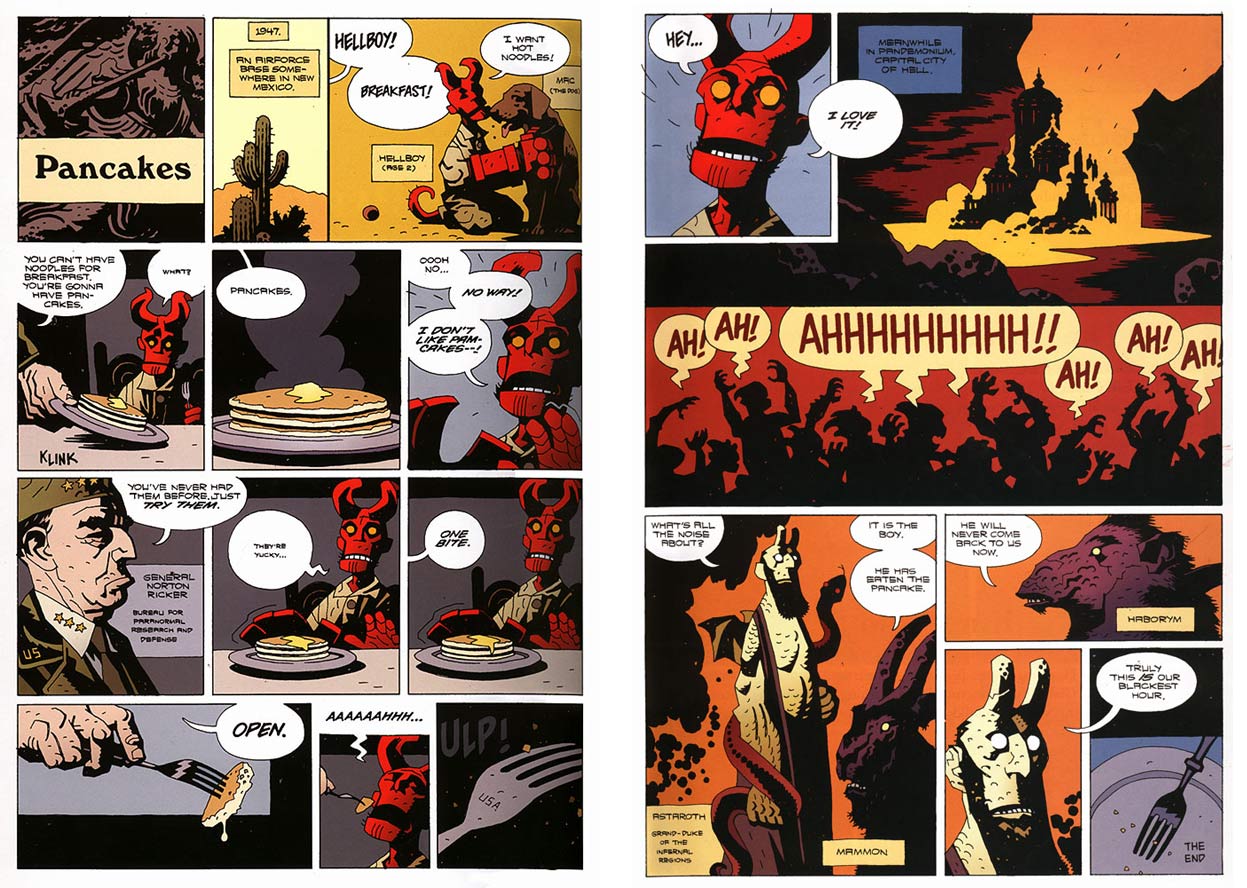
4/ https://www.comicmix.com/wp-content/uploads/2013/02/pancakes4.jpg pancakes

5/ John Bossy, Christianity in the West: 1400–1700.

6/ Bakhtin, Rabelais and His World.

7/ By “the countries [UK and the Netherlands] have some connections,” Em means that during the Glorious Revolution, William III (of Orange) and Mary II were invited to rule England, because they’d run out of endogenous rulers owing to having kicked James II/VI out. (They were invited because Mary was James’s eldest surviving child, and they reigned as co-monarchs, which honestly seems like a very rational move to me.)

8/ Peter Bruegel the Elder: The Fight between Carnival and Lent
https://en.wikipedia.org/wiki/The_Fight_Between_Carnival_and_Lent

Jan Miense Molenaer (1610–1668): The Battle between Carnival and Lent
https://en.wikipedia.org/wiki/Jan_Miense_Molenaer
https://en.wikipedia.org/wiki/Battle_Between_Carnival_and_Lent

Molenaer shared his studio with his wife, Judith Leyster, who was also an awesome painter: https://en.wikipedia.org/wiki/Judith_Leyster

Hieronymus Bosch: Ship of Fools
https://en.wikipedia.org/wiki/Ship_of_Fools_(painting)

The poem mentioned was written is by Jacop (Jacob) van Oestvoren who wrote “De Blauwe Schuit” (“The Blue Boat”) in 1413

9/ Joseph Roach, Cities of the Dead: Circum-Atlantic Performance

Episode 76: Pipe Dreams

Synopsis

If you’re one of those people who thinks about the Roman Empire a lot because aqueducts are really cool, you’re going to love this. Join Em and Jesse as they discuss the irrigation of the Chengdu Plain, the plumbing of Tenochtitlan, and water management at Machu Picchu. Then we round out our “the middle ages didn’t constantly smell awful” series with a discussion of the history of perfume.

Notes

1/ Various news articles about water pollution:
Cuyahoga River fires (yes, plural): https://www.smithsonianmag.com/history/cuyahoga-river-caught-fire-least-dozen-times-no-one-cared-until-1969-180972444/

Chicago River story: https://chicago.suntimes.com/politics/2023/9/28/23895006/trump-tower-chicago-river-pollution-attorney-general-kwame-raoul

2/ John Snow proved that the Broad Street Pump was carrying disease in 1854: https://www.ncbi.nlm.nih.gov/pmc/articles/PMC7150208/

Germ theory of disease was actually first proposed in 1546 but not widely accepted in Europe until the end of the 1880s. THE 1880s!
For more on Girolamo Fracastoro see: https://www.scientificamerican.com/article/the-physician-who-presaged-the-germ-theory-of-disease-nearly-500-years-ago/

3/ The Irrigation of the Chengdu Plain: the Dujiangyan irrigation system is a UNESCO heritage site! https://whc.unesco.org/en/list/1001/
https://en.wikipedia.org/wiki/Dujiangyan

4/ Tenochtitlan plumbing: the Chapultepec aqueduct! https://en.wikipedia.org/wiki/Chapultepec_aqueduct

5/ The Incan plumbing:
An article from UW-Madison (Go Badgers!!): https://ancientengrtech.wisc.edu/machu-picchu/machu-picchu-water-management/

6/ For the record, although there were people in the area of Venice from around the 10th century BCE on, the dedication of the first church, symbolically recognized as the founding of the city, was 421 CE. (There was a Roman city there before, of course.) Tenochtitlan, on the other hand, was founded around 1325 CE (with, again, some wiggle room).

7/ The tallest building in Des Moines, IA, is 801 Grand, which is 45 storeys high. [Sorry Des Moines!!! You are awesome.]

8/ Maledicta: The International Journal of Verbal Aggression, was published from 1977–2005. In vol. 12 (1996), they did publish an article entitled “Linguistic and Blasphemous Aspects of Bavarian Micturition and American Toilet Names” by the editor, Reinhold Aman. However, the journal is now offline.

He, uh. Really hated the Clintons.

9/ QI bits: I can’t find them. [I think you might need BBC iPlayer or a VPN or similar.–Jesse]

10/ The Ted Chiang short story is “Tower of Babylon,” which is collected in Stories of Your Life and Others. It’s really good!

11/ UW–Madison and building better potatoes: https://pasdept.wisc.edu/2019/10/07/new-potato-helps-farmers-weather-the-frost/

UW Machu Picchu project is part of UW-Madison’s Department of Civil and Environmental Engineering’s Ancient Engineering Technologies project:
https://ancientengrtech.wisc.edu/machu-picchu/

12/ Pomander: https://en.wikipedia.org/wiki/Pomander

13/ Wow, coming on hard with the perfume facts there, Em.

Recreating perfumes! https://www.smithsonianmag.com/smart-news/may-be-what-cleopatra-smelled-180972854/

An example of a glass perfume bottle (1st century CE): https://www.metmuseum.org/art/collection/search/239779

14/ National Theatre’s Antony and Cleopatra with Ralph Fiennes and Sophie Okonedo is the best.
https://www.nationaltheatre.org.uk/productions/antony-and-cleopatra/

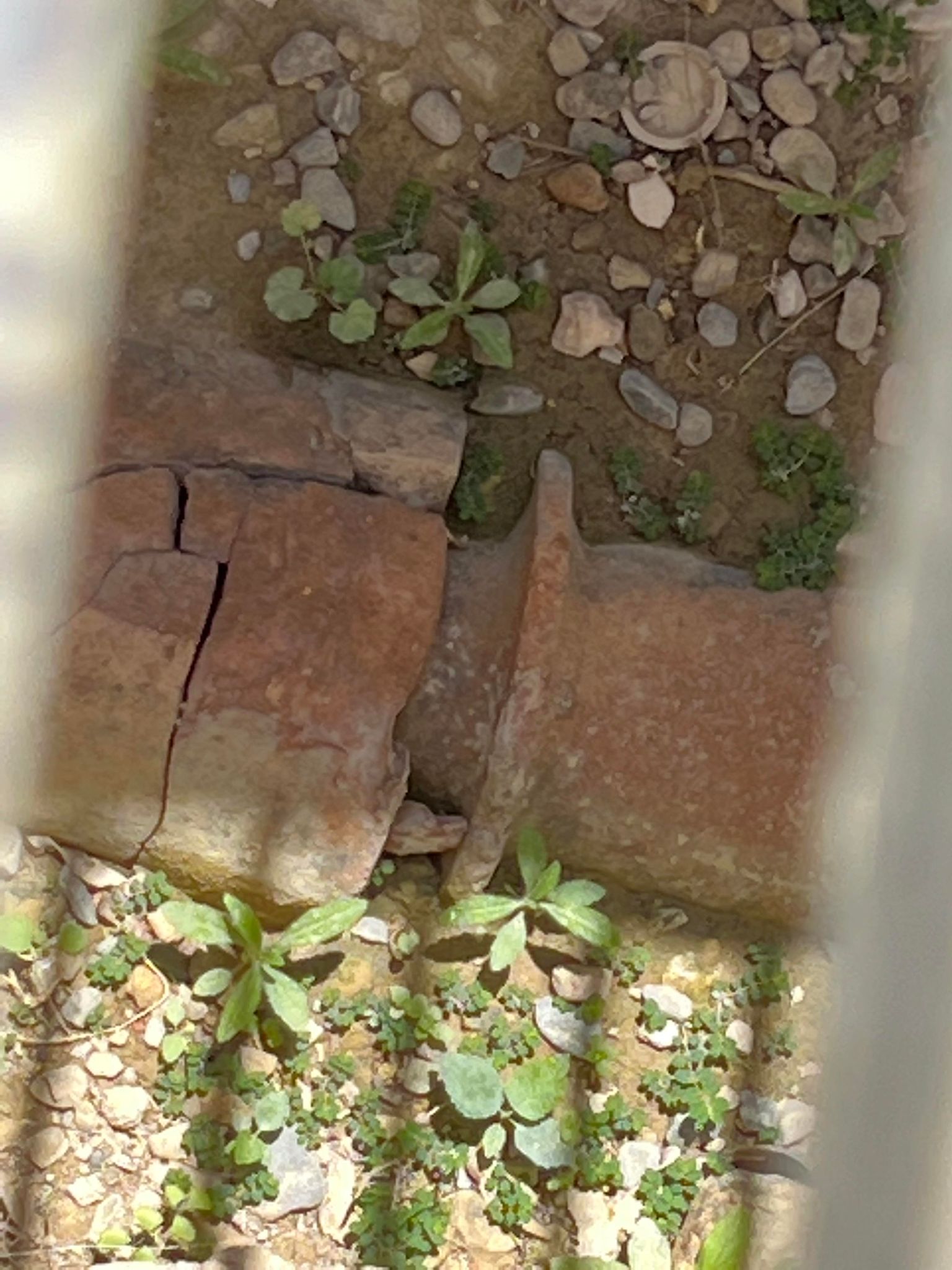
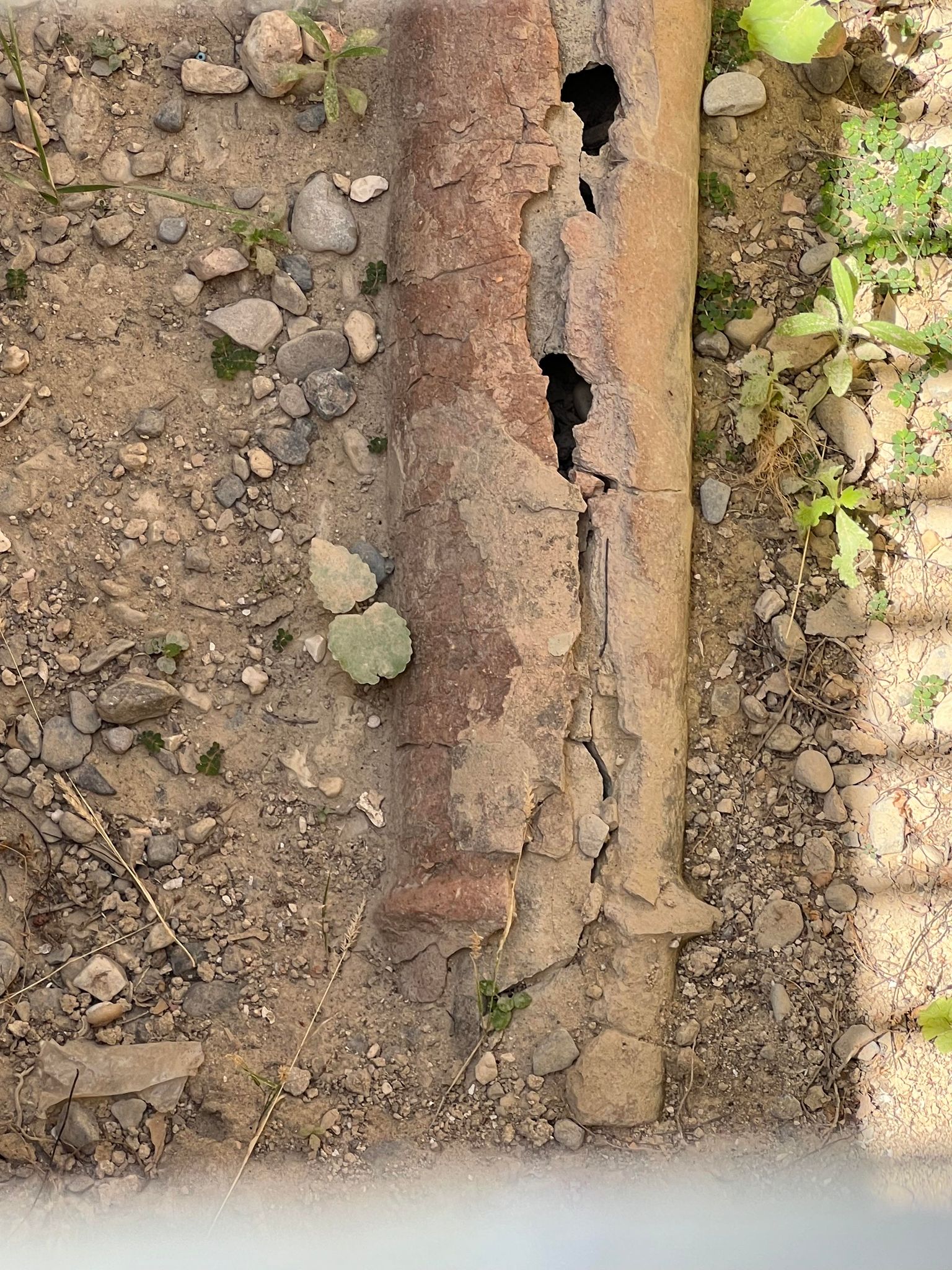
Some photos Jesse took of old pipes on Knossos:

A spot in Knossos where two ancient pipes join.A pipe with a crack in it.